Vision is one of the most important senses in everyday life. It helps us recognize faces, read books, drive safely, enjoy nature, and understand the world around us. However, many people do not think about their eyesight until they experience blurry vision, eye strain, or other vision-related problems. This raises an interesting question: what is the best vision you can have, and how can you maintain it throughout your life?
The answer goes beyond simply having clear eyesight. Good vision involves seeing objects clearly at different distances, recognizing colors, noticing movement, and having healthy eyes that work comfortably together. Understanding what vision means and what contributes to excellent eyesight can help you make better decisions about your eye health.
In this article, we will explore how human vision works, what is considered normal eyesight, what the best vision possible looks like, and how you can protect your eyes.
What Is Vision?
Vision is the ability of your eyes and brain to work together to recognize and interpret the world around you. Your eyes collect light from the environment and send visual information to the brain through the optic nerve. The brain then processes this information, allowing you to identify objects, understand shapes, recognize colors, and judge distances.
When people ask, what is vision, they are usually referring to their ability to see clearly. However, vision is much more complex than sharp eyesight alone.
Several important functions contribute to good vision, including:
- Visual acuity: The ability to see small details clearly.
- Color perception: The ability to distinguish between different colors.
- Peripheral vision: Seeing objects outside your direct line of sight.
- Depth perception: Understanding how far away objects are.
- Contrast sensitivity: Recognizing objects against backgrounds with similar brightness.
- Eye coordination: Both eyes working together to create a single, comfortable image.
All these functions contribute to your overall visual experience. Someone may have excellent visual acuity but still experience difficulties with depth perception or color recognition.
What Is the Best Vision You Can Have?
When discussing the best eyesight, 20/20 vision is commonly considered the standard for normal visual acuity. It means you can see at 20 feet what a person with standard visual acuity is expected to see at that distance.
However, 20/20 vision does not necessarily represent the highest level of visual acuity a person can achieve.
Some individuals can have 20/15 or even 20/10 vision. These measurements indicate that they can recognize smaller details at 20 feet than someone with standard 20/20 vision.
For example:
- 20/20 vision: Standard visual acuity.
- 20/15 vision: You can see at 20 feet what a person with standard vision sees at 15 feet.
- 20/10 vision: You can see at 20 feet what a person with standard vision sees at 10 feet.
These measurements describe distance visual acuity, not every aspect of eyesight. They also do not guarantee that someone has completely healthy eyes.
The best vision possible varies between individuals because genetics, eye structure, age, and overall eye health all play important roles.
Understanding Different Vision Measurements
Eye care professionals use several measurements to evaluate how well your eyes function. The Snellen eye chart is one of the most familiar tools used during routine eye examinations.
Here is a simple comparison of common visual acuity measurements:
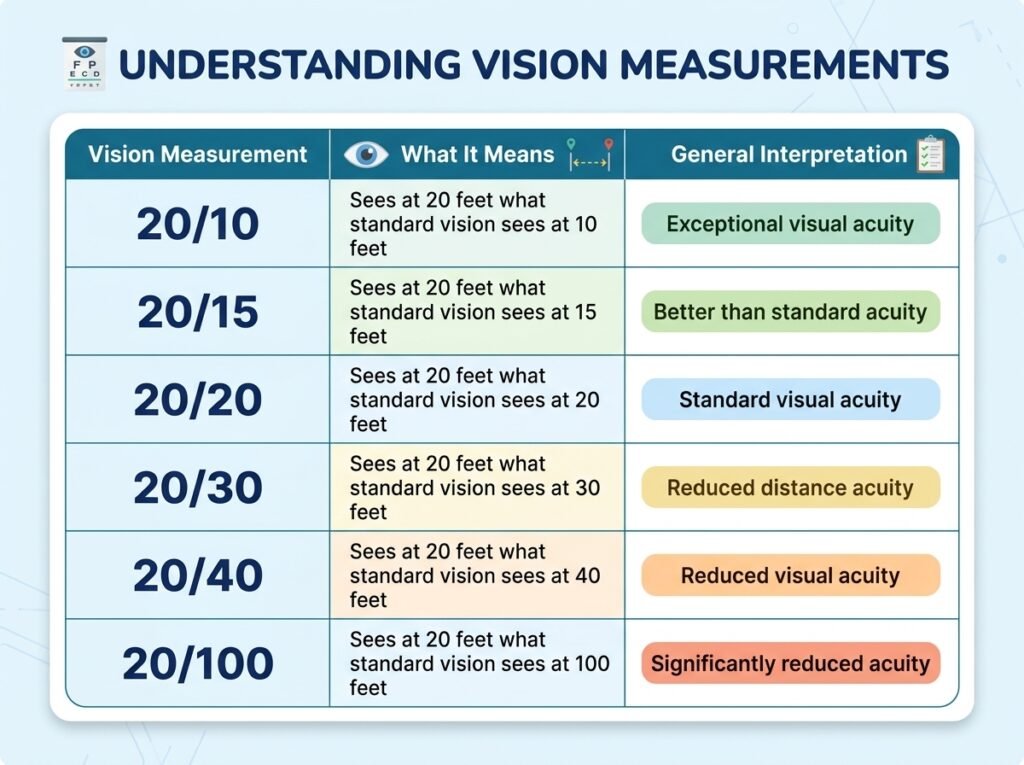
These measurements are useful for understanding distance vision, but they do not provide a complete picture of eye health. An eye examination may also evaluate eye pressure, retinal health, focusing ability, and other important functions.
What Factors Affect the Quality of Your Vision?
Several factors influence how clearly and comfortably you see. Some are related to your natural eye structure, while others are influenced by lifestyle and environmental conditions.
1. Genetics
Your genes influence the shape and structure of your eyes. They can also affect your likelihood of developing conditions such as nearsightedness, farsightedness, and astigmatism.
Although genetics cannot be changed, regular eye examinations can help identify vision problems early.
2. Age
Vision naturally changes as people grow older. Children may experience changes in their eyesight as their eyes develop, while adults commonly experience difficulty focusing on nearby objects as they age.
Age-related conditions such as cataracts, glaucoma, and macular degeneration can also affect vision.
3. Nutrition
A balanced diet supports general health, including eye health. Nutrients such as vitamin A, vitamin C, vitamin E, zinc, lutein, and zeaxanthin contribute to normal eye function.
Foods that support a healthy diet include:
- Carrots and sweet potatoes.
- Spinach and kale.
- Eggs.
- Citrus fruits.
- Fish rich in omega-3 fatty acids.
- Nuts and seeds.
Eating nutritious foods cannot guarantee perfect eyesight, but it can help support overall eye health.
4. Digital Screen Exposure
Spending long hours looking at computers, smartphones, and tablets can contribute to digital eye strain. Common symptoms include dry eyes, headaches, temporary blurred vision, and tired eyes.
The 20-20-20 rule is a simple way to reduce screen-related eye strain. Every 20 minutes, look at something approximately 20 feet away for at least 20 seconds.
5. Environmental Conditions
Dust, smoke, excessive sunlight, and dry environments can affect eye comfort. Wearing appropriate sunglasses outdoors and protective eyewear in potentially hazardous environments can help reduce certain risks.
How Can You Maintain the Best Vision Possible?
Although not everyone can naturally achieve 20/10 or 20/15 vision, there are practical ways to protect your eyesight and maintain healthy visual function.
Schedule Regular Eye Examinations
Routine comprehensive eye examinations help detect vision changes and eye conditions that may not produce noticeable symptoms in their early stages. Your eye care professional can recommend an examination schedule based on your age, health, and risk factors.
Wear the Correct Prescription Eyewear
If you have nearsightedness, farsightedness, or astigmatism, properly prescribed glasses or contact lenses can help you see more clearly.
Avoid using someone else’s prescription glasses because their visual needs may be different from yours.
Protect Your Eyes From UV Exposure
Long-term exposure to ultraviolet radiation may increase the risk of certain eye conditions. Choose sunglasses that provide 100% UVA and UVB protection or are labeled UV400.
Take Breaks From Digital Devices
Give your eyes regular breaks when working on computers or using smartphones. Adjust screen brightness, maintain a comfortable viewing distance, and remember to blink regularly.
Maintain a Healthy Lifestyle
Regular physical activity, balanced nutrition, adequate sleep, and avoiding smoking can contribute to overall health and help protect against certain eye-related risks.
Can You Improve Your Eyesight Naturally?
Many people search for natural ways to achieve the best vision possible without glasses or contact lenses. While healthy habits can support eye health and reduce eye strain, they cannot reliably correct refractive errors such as nearsightedness, farsightedness, or astigmatism.
For example, eating carrots provides vitamin A, which is important for normal vision, but consuming extra carrots will not eliminate the need for prescription glasses.
Similarly, eye exercises may help with certain focusing or coordination problems when recommended by an eye care professional. However, they do not permanently change the shape of the eye or correct most refractive errors.
If you experience persistent blurry vision, headaches, or difficulty focusing, a professional eye examination is the best way to identify the cause.
What Is the Difference Between Good Eyesight and Healthy Eyes?
Good eyesight and healthy eyes are closely related, but they are not exactly the same thing.
Good eyesight generally refers to how clearly you can see, while healthy eyes refers to the overall condition and functioning of your eyes.
For instance, someone may have 20/20 vision but still have an eye condition that requires medical attention. Some eye diseases develop without noticeable changes in visual acuity during their early stages.
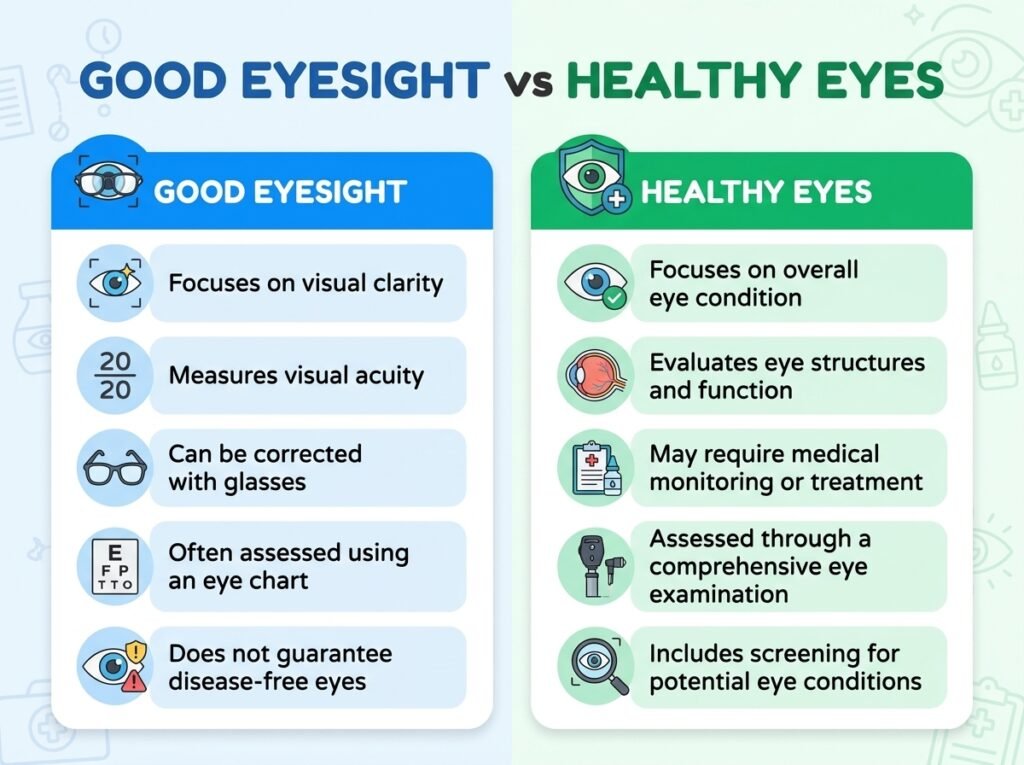
This is why maintaining healthy eyes is just as important as achieving clear vision.
When Should You Visit an Eye Care Professional?
You should arrange an eye examination if you experience ongoing blurry vision, frequent headaches associated with visual tasks, difficulty seeing at night, or sudden changes in your eyesight.
Some symptoms require immediate medical attention. These include sudden vision loss, flashes of light, a sudden increase in floaters, a dark curtain across your vision, or severe eye pain.
Do not ignore unexpected changes in your eyesight. Early evaluation can make a significant difference in identifying and managing eye problems.
Frequently Asked Questions (FAQs)
1. What is the best vision you can have?
20/20 vision is considered standard visual acuity, but some people can naturally achieve 20/15 or 20/10 vision. These measurements represent better-than-standard distance visual acuity.
2. Is 20/10 vision better than 20/20?
Yes. A person with 20/10 vision can see at 20 feet what someone with standard 20/20 vision would need to be at 10 feet to see.
3. What is considered perfect eyesight?
20/20 vision is commonly described as normal or standard visual acuity. However, perfect eyesight is not a complete medical measurement because it does not evaluate every aspect of visual function or eye health.
4. Can you naturally achieve the best vision possible?
Your natural visual acuity is influenced by genetics and eye structure. Healthy habits can support eye health, but they cannot guarantee better-than-normal visual acuity or correct refractive errors.
5. Does 20/20 vision mean your eyes are healthy?
Not necessarily. You can have 20/20 vision and still have an eye condition. Comprehensive eye examinations are important for checking the overall health of your eyes.
6. What foods are best for maintaining healthy vision?
Leafy green vegetables, carrots, sweet potatoes, eggs, citrus fruits, nuts, and fish provide nutrients that support eye health. A balanced diet is more beneficial than relying on a single food.
7. Can wearing glasses weaken your eyesight?
No. Wearing properly prescribed glasses does not weaken your eyes. Glasses simply help focus light correctly so you can see more clearly.
8. How often should I get my eyes checked?
The recommended frequency depends on your age, medical history, symptoms, and risk factors. An eye care professional can suggest an appropriate examination schedule.
Conclusion
Understanding what is the best vision you can have involves more than achieving a particular number on an eye chart. Although 20/20 vision is considered standard visual acuity, some individuals can naturally achieve 20/15 or even 20/10 vision. However, clear eyesight is only one part of overall eye health.
Knowing what vision means, understanding different visual acuity measurements, and recognizing the factors that affect eyesight can help you make informed decisions about your eye care.
The best approach is to maintain a healthy lifestyle, wear appropriate prescription and protective eyewear, take regular breaks from digital screens, and schedule comprehensive eye examinations. Remember, the goal is not simply to see clearly but also to protect your eyesight and maintain healthy vision throughout your life.